Get a Free Diagnosis for Your Property Project
Prepare Your Property With a Site Preparation Service in Lubbock, TX
Prepare residential ground for future improvements with careful clearing, earthmoving, leveling, fill placement, and compaction.
Prepare Your Property Before the Next Phase Begins
Construction and outdoor improvements rely on the condition of the ground beneath them. Vegetation, surface obstacles, unstable topsoil, uneven elevations, and soft areas can interfere with the work that follows. Moving forward without addressing those conditions may contribute to settling, drainage problems, or an unsuitable work area. A site preparation service creates a cleaner, more stable starting point by addressing the land before the next phase begins.
Hendrix DIRT WORKS provides residential site preparation in Lubbock, TX, for homeowners planning building projects and property improvements. We clear designated areas, remove unsuitable surface material where necessary, subgrade the site, place appropriate fill, and compact the ground according to the needs of the project.
With over 17 years of combined experience, we understand that preparation should reflect the actual property rather than follow the same process on every job. The amount of clearing, excavation, filling, and grading depends on existing conditions and what the site needs to support next. We welcome residential projects large and small and give each property personal attention throughout the work.
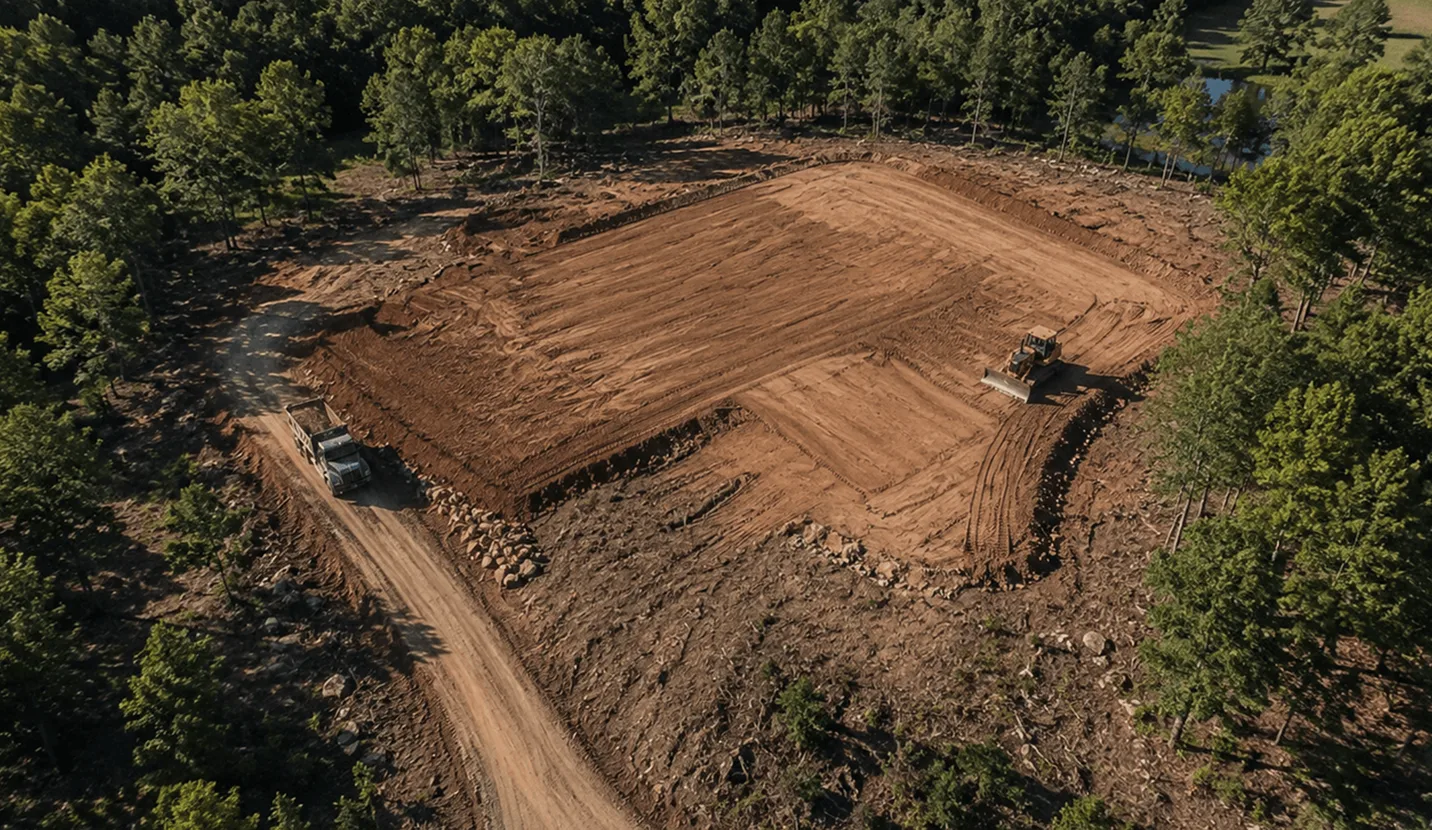
Start With Clear, Stable Ground for Future Improvements
Site preparation begins with understanding what the property owner plans to do with the designated area. Preparing ground for a residential building, shop, outdoor improvement, or other project can require different elevations and ground conditions. Knowing the intended use helps determine how much existing material needs to be removed and how the site should be shaped.
Vegetation and surface obstacles are addressed first when they interfere with the planned work area. Removing unwanted growth and debris gives equipment clearer access and exposes the underlying ground. This also makes it easier to identify soft areas, uneven elevations, or other conditions that need correction before the next phase.
Unstable topsoil may need to be stripped from portions of the site. Organic or soft surface material does not provide the same starting conditions as properly prepared earth. Removing unsuitable material allows the work to progress toward firmer ground before fill and compaction are considered.
Site excavation may also be needed to adjust elevations. High areas can be cut down, while lower sections may require suitable fill. The goal is to establish a ground profile that fits the planned improvement instead of forcing the project onto existing terrain that does not meet its needs.
Our residential site preparation process can include:
- Work-area clearing: We remove vegetation and surface obstacles that interfere with access or the planned project area.
- Topsoil removal: We strip unsuitable or unstable surface material where ground conditions require a firmer starting point.
- Site excavation: We cut and move earth where existing elevations need correction before further preparation.
- Subgrade preparation: We shape the underlying ground to establish a more consistent base for the next stage of work.
- Fill placement: We add suitable earth material where additional elevation or ground correction is required.
- Ground compaction: We compact prepared areas to create firmer conditions before the property moves into its next phase.
Subgrading is an important part of preparing the site after major clearing and earthmoving have been completed. It establishes the underlying shape before later materials or improvements are added. This step can involve cutting high sections, filling lower areas, and shaping the surface around planned elevations.
Fill material must also be placed with the intended ground profile in mind. Simply depositing dirt into low sections without properly spreading and preparing it does not create the same result as controlled placement. We distribute material across the designated area and compact it to establish firmer ground conditions.
Site grading can refine the prepared area once larger earthmoving tasks are complete. This helps create more consistent elevations and transitions into surrounding land. Where drainage is a concern, the way the site is shaped should also consider how surface water moves across nearby areas.
Every stage prepares the property for what comes next. Taking time to address the existing ground before construction or another improvement begins can reduce the likelihood of discovering obvious surface problems after the project is already underway.
Build Your Next Project on Properly Prepared Land
A clean-looking lot is not necessarily a prepared site. Ground can appear open while still containing soft topsoil, unsuitable elevations, low sections, or other conditions that need attention before the next project begins. Site preparation goes beyond clearing visible obstacles by addressing the underlying earth and creating a more suitable work area.
For homeowners, this can be important when planning a new structure or improving an undeveloped portion of a residential property. A shop, shed, home-related project, or outdoor improvement may require a defined area with elevations that differ from the natural terrain. Residential site preparation allows those conditions to be established before later construction begins.
Site preparation can also connect with other groundwork. Pad preparation may follow when a project requires a level, compacted dirt pad for a structure. Dirt work can address larger amounts of soil that need to be moved across the property, while grading can refine the finished ground profile. Land clearing may be necessary when dense trees or brush cover a larger portion of the planned site.
Drainage conditions are another consideration. Water that naturally collects in or moves through a project area should not be ignored during preparation. Depending on the property, grading or separate drainage work may be needed to address runoff and low areas. The appropriate approach depends on existing contours and the planned use of the site.
Hendrix DIRT WORKS tailors the work to the individual property. We do not assume that every residential site needs the same depth of excavation, amount of fill, or level of clearing. We evaluate the land and discuss what the homeowner plans to accomplish before determining the work required.
We also take on smaller residential projects that some larger operations may overlook. A homeowner preparing an area for a modest shop or another focused improvement still needs careful groundwork. We bring the same attention to those projects that we give to larger property work.
Communication remains important throughout the process. We explain the planned approach, perform the necessary clearing and earthmoving, and stay focused on the finished condition of the site. Hendrix DIRT WORKS is fully insured and bonded, and we bring over 17 years of combined experience to residential property work.
Project timing depends on factors such as the size of the site, vegetation, existing elevations, soil conditions, excavation requirements, fill needs, and equipment access. A relatively clear and level area will have different preparation requirements from an overgrown site with substantial elevation changes.
Cost also varies according to those conditions. Rather than assigning unsupported fixed pricing, we offer free quotes so the property and intended project can be considered before the work begins. Warranty options are available and can be discussed according to the project.
Proper site preparation gives future improvements a clearer starting point. From removing obstacles and unstable topsoil to excavating, subgrading, placing fill, and compacting the ground, each step helps turn an untreated area into land that is better prepared for the work ahead.
Site Preparation FAQs
-
Site preparation can include vegetation and obstacle clearing, unsuitable topsoil removal, excavation, subgrading, fill placement, leveling, and compaction. The exact steps depend on the property and the improvement planned for the site.
-
Soft or organic surface soil may not provide suitable conditions for the planned project. Where necessary, removing unsuitable topsoil exposes firmer ground that can be further prepared with excavation, fill, grading, and compaction.
-
No. Site preparation addresses the broader work area before construction or property improvements begin. Pad preparation focuses specifically on creating a solid, level dirt pad intended to support a structure.
-
Yes. Hendrix DIRT WORKS welcomes smaller residential projects as well as larger property improvements. The work is planned according to the actual site and intended use.
-
Yes. Grading can be part of preparing a residential site when existing elevations need to be corrected, or the ground needs further shaping before the next phase begins.
Prepare Your Ground for What Comes Next
Clear, shape, fill, and compact your residential site before moving forward with construction or another planned property improvement.