Get a Free Diagnosis for Your Property Project
- Home
- Plainview, TX
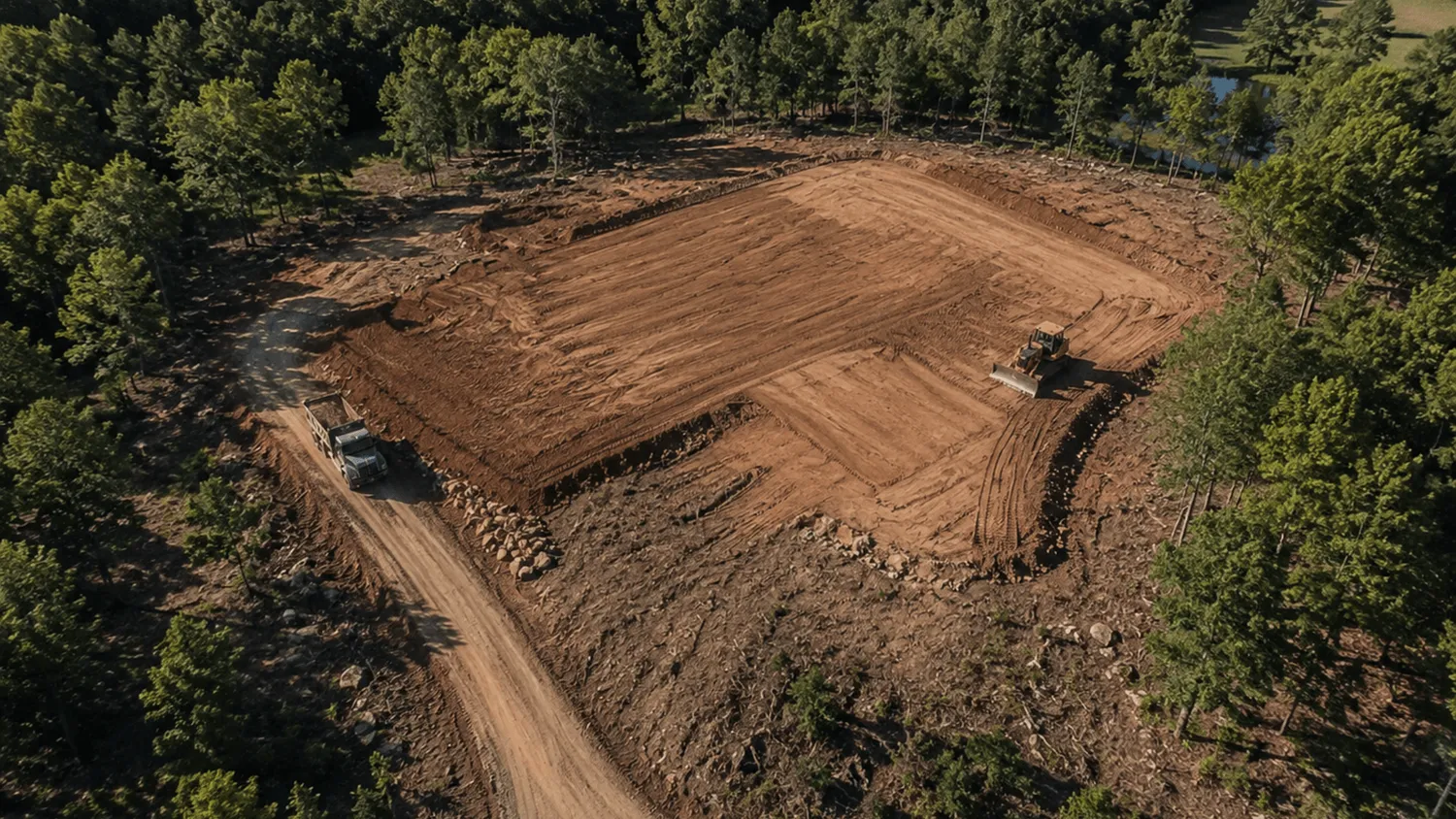
Road construction involves more than just spreading gravel. We shape the roadbed with a crown that sheds water to ditches or bar ditches on either side, compact the subgrade to prevent rutting, and apply base course material in lifts to build up the road profile. The finished surface receives a top layer of graded gravel or caliche that’s bladed smooth and compacted to create a firm, durable travel surface. Maintenance grading is typically needed once or twice a year to restore the crown and remove washboard, and we provide that service on a scheduled or as-needed basis.
Demolition and concrete breaking are handled with hydraulic breakers and excavators sized for the job. We break up driveways, sidewalks, footings, and slabs, then load and haul the material off-site for recycling or disposal. Our equipment includes excavators ranging from compact units for tight residential work to larger machines capable of demolishing heavy commercial slabs and foundations. Hydraulic breakers deliver controlled force to fracture concrete without damaging adjacent structures or utilities. We coordinate utility locates before any breaking begins, and we work around active service lines with hand tools and careful excavation techniques.
Debris removal keeps your property clean and your project on schedule. We haul off broken concrete, asphalt, scrap metal, brush piles, construction waste, and general debris in dump trucks and trailers sized for efficient loading and transport. Our crews rake and clean the site after debris is loaded, leaving you with a clear work area ready for the next phase. We separate recyclable materials when possible and deliver concrete rubble to approved recycling facilities where it’s crushed and reused as base material.
Lot clearing and land clearing services remove brush, mesquite, and surface rock so you can start with a blank canvas. Mesquite in this area can develop deep taproots and dense thickets that require heavy equipment to remove completely. We use bulldozers and excavators to uproot vegetation, pile it for burning or hauling, and then rake the surface to remove roots and rocks. For larger tracts, we work in phases to minimize dust and maintain access roads during clearing operations. Once cleared, the land is ready for grading, cultivation, or construction.
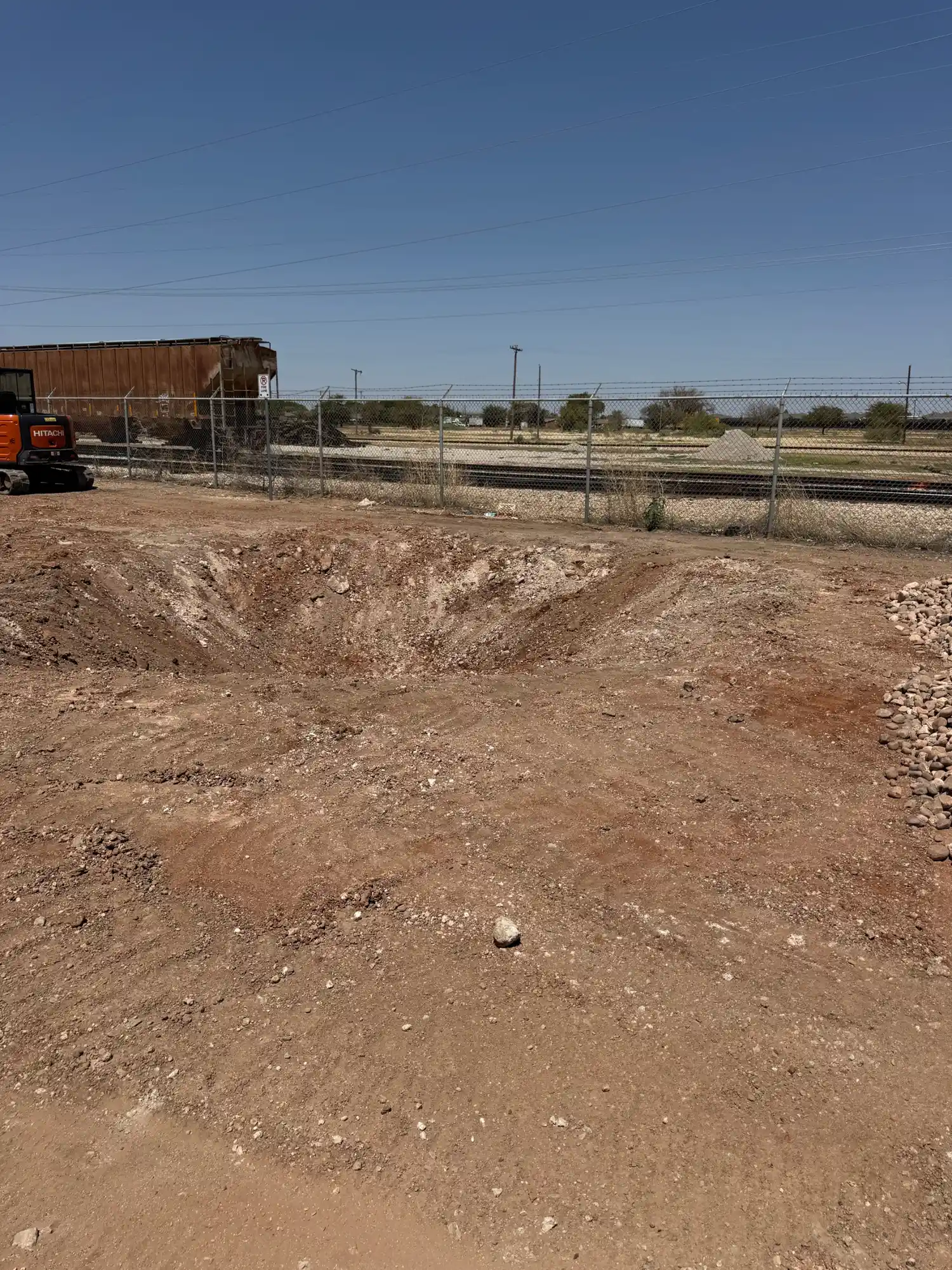
For drainage and water management, we install French drains, reshape swales, and regrade slopes to direct runoff away from foundations and pavements. This is critical in areas where flat topography and clay soils mean water doesn’t move on its own. French drains consist of perforated pipe surrounded by graded gravel and wrapped in geotextile fabric, installed in trenches that intercept subsurface water and convey it to a safe discharge point. Surface swales are shallow channels graded with gentle side slopes and a positive fall toward a culvert or drainage easement. We use laser-guided equipment to achieve the precise slopes needed for effective drainage, often working with falls as low as one-half percent.
Water management also includes regrading areas where ponding occurs due to settled fill, improper original grading, or changes in site conditions. We identify low spots, calculate the volume of fill needed to achieve positive drainage, and import or redistribute soil to eliminate depressions. This work often involves coordination with landscape contractors, irrigation installers, and engineers who design stormwater systems for larger sites. Our role is to execute the earthwork to the specified grades and ensure the finished surface functions as intended.
We schedule site assessments to walk the property, discuss your goals, and provide a clear scope and estimate. During the assessment, we evaluate soil conditions, measure existing elevations, identify potential challenges such as buried utilities or rock layers, and discuss your timeline and budget. Our written estimates include detailed line items for each phase of work, equipment and labor costs, material quantities, and hauling fees. We answer your questions about methods, materials, and sequencing, and we provide recommendations based on our experience with similar projects in the area.
Our equipment fleet includes excavators, skid steers, dozers, and dump trucks, maintained in-house to minimize downtime. Preventive maintenance is performed on a strict schedule to ensure machines are available when your project is ready to start. We own backup equipment for critical tasks, so a mechanical failure doesn’t delay your work. Operators are trained in safety protocols, equipment operation, and site-specific best practices for working in Plainview’s soil and weather conditions.
We coordinate with utilities for locates, obtain necessary permits, and communicate with you at each phase. Utility locates are verified on-site before any excavation begins, and we hand-dig around marked lines to confirm depth and location. Permits for driveway connections, culvert installations, and work in public right-of-way are obtained from the city or county, and we provide the documentation and site plans required for approval. Throughout the project, we update you on progress, weather delays, and any field conditions that affect the scope or schedule.
Most excavation and grading projects in Plainview can begin within one to two weeks of approval, depending on weather and site access. Spring and fall are busy seasons, so scheduling early ensures availability. Summer heat doesn’t stop work, but it does require earlier start times and more frequent equipment checks. Winter projects are feasible during dry periods, though frozen ground can delay excavation if temperatures drop for extended periods. Gravel driveway projects typically take one to three days, depending on length and width. Larger site preparation and pad work may span one to two weeks, with additional time for material delivery and compaction verification.
When you need excavation, grading service, or any phase of dirt work service in Plainview, call
806-777-3807
to schedule your site assessment. We’ll answer your questions, review your plans, and deliver the earthwork your project depends on. Our commitment is to provide reliable service, quality workmanship, and communication that keeps your project moving forward from site visit to final grading.
Complete the form below to describe your excavation, grading, or site preparation needs in Plainview, TX. Include details about your property location, project scope, timeline, and any site challenges you’ve identified. A member of our crew will contact you within one business day to schedule a site assessment, answer technical questions, and provide a detailed scope and estimate.
We assess soil conditions, drainage requirements, and access constraints at no charge. During the site visit, we’ll discuss equipment needs, material quantities, and project phases so you understand exactly what the work entails. Most projects can begin within one to two weeks of approval, depending on weather and permit requirements.
Call 806-777-3807 to speak directly with our team, or submit your project details now to start the assessment process.