Get a Free Diagnosis for Your Property Project
Reclaim Your Acreage With a Forestry Mulching Service in Lubbock, TX
Reclaim overgrown residential land by processing unwanted trees, saplings, and thick brush into mulch directly on your property.
Clear Unwanted Growth While Processing Material On-Site
Thick brush, saplings, and unwanted trees can make residential acreage difficult to access and maintain. When vegetation becomes too established for ordinary mowing equipment, forestry mulching provides a way to process heavy growth directly where it stands. Instead of creating large piles of wood and brush that need separate handling, specialized equipment grinds vegetation into smaller organic material on-site.
Hendrix DIRT WORKS provides forestry mulching in Lubbock, TX, for homeowners who want to reclaim overgrown sections of their property. A high-powered mulching attachment processes trees and thick brush close to ground level, leaving shredded material across the cleared area.
This approach can be useful for selective clearing, opening access, addressing dense growth, and preparing acreage for easier future use. With over 17 years of combined experience, we evaluate the vegetation and property conditions before determining how to approach each project. We also welcome smaller residential jobs that larger operations may pass over.
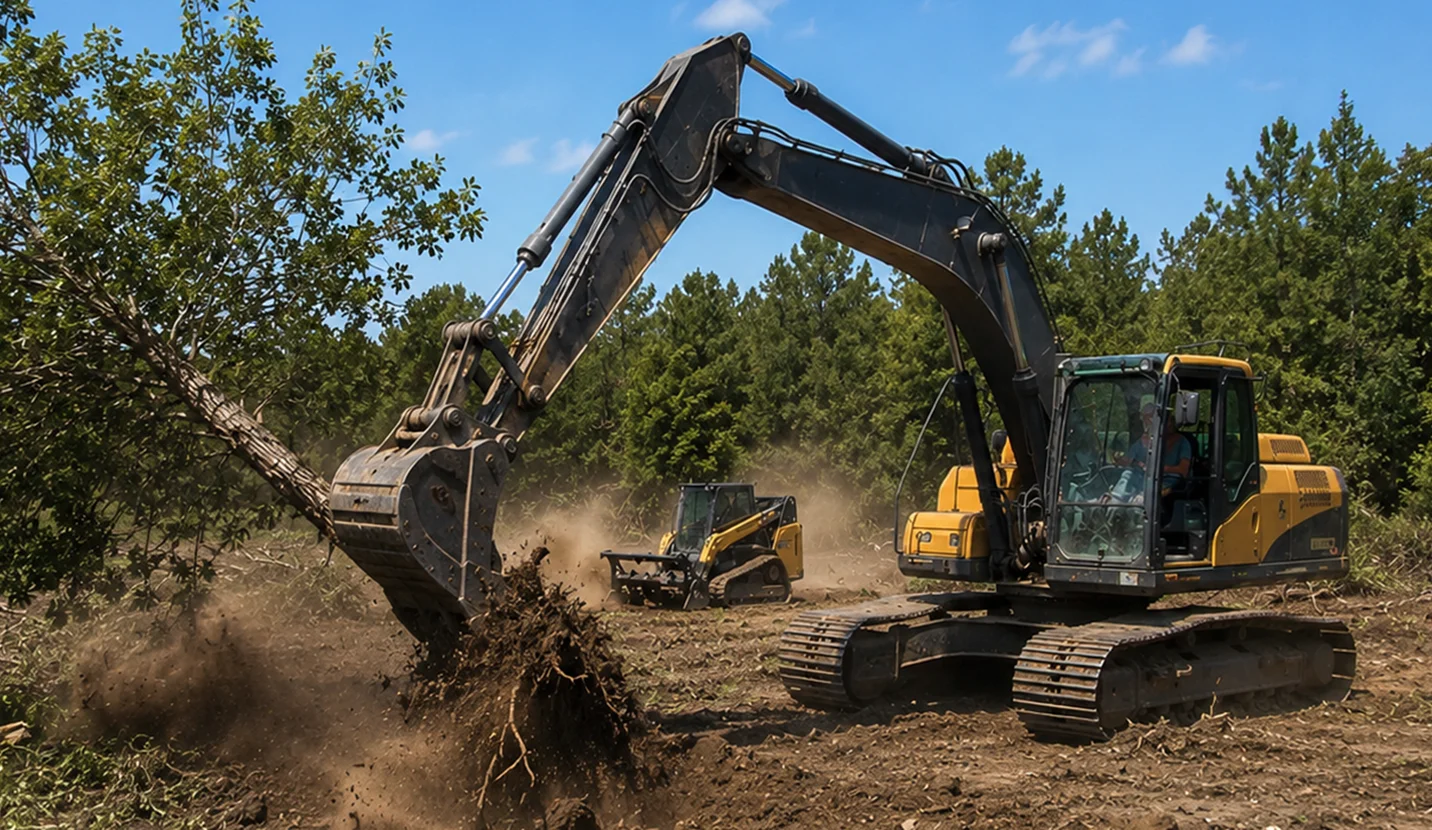
Process Trees and Brush Directly Where They Grow
Traditional vegetation removal can create substantial material that still needs to be handled after the initial clearing. Cut trees, branches, brush, and other growth may remain in piles unless another step is taken to process or remove them. Forestry mulching approaches the work differently by using a specialized attachment to shred unwanted vegetation directly on-site.
Our process begins by reviewing the designated area and the type of growth present. Vegetation density, tree size, terrain, equipment access, and the homeowner’s goals can all affect how the project should be planned. A lightly wooded area with scattered saplings presents different conditions from acreage covered by thick brush and closely spaced trees.
Once the work area is established, mulching equipment can process selected vegetation into smaller material. Trees, saplings, and brush are ground down toward soil level, reducing the amount of bulky material left behind. The resulting mulch is distributed across the ground rather than automatically requiring separate piles of branches and logs.
Our forestry mulching work can include:
- Property assessment: We review vegetation density, terrain, access, and the designated clearing area before equipment work begins.
- Tree processing: We mulch unwanted trees within the planned work zone where conditions are appropriate for the equipment.
- Sapling removal: We process smaller woody growth that can quickly spread across unmanaged residential acreage.
- Brush mulching: We grind thick brush and other unwanted vegetation into smaller organic material directly on-site.
- Ground-level processing: We reduce vegetation close to the soil surface to open previously obstructed portions of the property.
- Mulch distribution: We leave processed organic material across the work area instead of creating large piles of unprocessed vegetation.
Keeping processed material on-site can reduce the need to haul away substantial amounts of wood debris. The mulch layer also covers exposed ground after vegetation is processed. This distinguishes forestry mulching from clearing methods that primarily remove vegetation and leave a more open soil surface.
Selective work is another reason property owners may consider forestry mulching. Not every project requires clearing an entire parcel. A homeowner may want to open a specific section, improve access through thick vegetation, clear around certain property areas, or remove unwanted growth while retaining vegetation elsewhere.
Forestry mulching can also reveal ground that was previously hidden beneath brush and trees. Once dense vegetation is processed, homeowners can better see the contours and condition of the property. That can make it easier to determine whether additional grading, dirt work, site preparation, or other improvements are needed.
The method selected should match the desired finished condition. If a homeowner wants broader removal of trees, brush, and surface vegetation, land clearing may be more appropriate. If the primary issue is heavy undergrowth, brush clearing may fit the project. Tree mulching can focus more specifically on unwanted standing or fallen trees. We consider what is growing on the property and what the homeowner wants the area to become.
Reclaim Overgrown Acreage With Less Debris Handling
Residential land can become difficult to manage when woody vegetation is allowed to grow for years. Small saplings can become established trees, brush can spread across open areas, and dense growth may restrict movement through parts of the property. Eventually, ordinary lawn equipment may no longer be suited to the conditions.
Forestry mulching gives property owners another way to reclaim those areas. By processing vegetation where it grows, the work can open land without automatically creating large piles of logs and brush that need separate removal. This can be particularly useful on acreage where the homeowner wants to clear unwanted growth while keeping processed organic material on the ground.
The remaining mulch can provide ground coverage after clearing. This layer can help cover exposed soil and return processed organic material to the area. The supplied project information also identifies erosion reduction and weed suppression as benefits of the resulting mulch blanket.
The finished property can also become easier to access. Dense vegetation may prevent homeowners from walking, driving equipment, or clearly seeing portions of their acreage. Processing that growth can reopen those areas and provide a clearer view of the land.
Forestry mulching may also be the first phase of a broader property project. Once vegetation is removed, site preparation can address ground intended for future improvements. Grading can correct uneven terrain, while dirt work can reshape larger elevations. If the homeowner wants to establish vehicle access, gravel driveway or dirt road work may follow.
Hendrix DIRT WORKS understands that residential customers do not always have large-scale clearing projects. Some homeowners need a focused section of acreage addressed, a heavily overgrown area reopened, or selected unwanted vegetation removed. We take on smaller residential jobs as well as larger property improvements.
We treat every customer like family and tailor our approach to the actual conditions of the property. That means discussing what the homeowner wants to keep, what needs to be processed, and how the cleared area will be used afterward. Clear communication helps establish the scope before equipment work begins.
We are fully insured and bonded and bring over 17 years of combined experience to residential excavation and land improvement work. We stay focused on the finished result and do not consider the job complete until the customer is satisfied.
Project timing varies based on acreage, vegetation density, tree size, terrain, equipment access, and the amount of material being processed. A smaller area of brush and saplings will have different requirements from several acres containing heavier woody growth.
Pricing also depends on those site-specific conditions. We do not provide unsupported fixed rates based solely on acreage. Free quotes are available so we can review the property and planned work area before determining the scope. Warranty options are also available and can be discussed according to the project.
If thick trees, saplings, or brush are preventing you from using part of your residential property, forestry mulching can process that unwanted growth and leave the material on-site in a more manageable form. Our focus is to help open the designated area while giving your land the attention the project requires.
Forestry Mulching FAQs
-
Forestry mulching can process unwanted trees, saplings, thick brush, and other woody vegetation within a designated work area. The vegetation is shredded into smaller organic material directly on-site.
-
The processed vegetation is left across the ground as a mulch layer. This reduces the need to haul away large piles of unprocessed wood and brush.
-
No. Forestry mulching processes vegetation into mulch on-site. Land clearing can involve broader removal of trees, brush, vegetation, and surface debris. The appropriate approach depends on the property and desired result.
-
Yes. Forestry mulching can focus on designated portions of residential acreage rather than automatically clearing the entire property. The planned area depends on access, vegetation, and the homeowner’s goals.
-
Yes. Hendrix DIRT WORKS welcomes smaller residential projects as well as larger acreage improvements. We evaluate the work according to the actual vegetation and property conditions.
Reclaim More of Your Overgrown Land
Process unwanted trees, saplings, and thick brush directly on-site to open residential acreage and reduce bulky vegetation debris.