
Services Include:
- Water flow management
- Drainage ditch construction
- Rock-lined drainage channels
- Culvert installation & replacement
- Erosion control solutions
- Driveway washout prevention
- Property entrance improvements
- Ranch road drainage enhancements
Water Management Systems That Function Year After Year
Ponds and Culverts in Lubbock for drainage control, property access, and erosion prevention on acreage
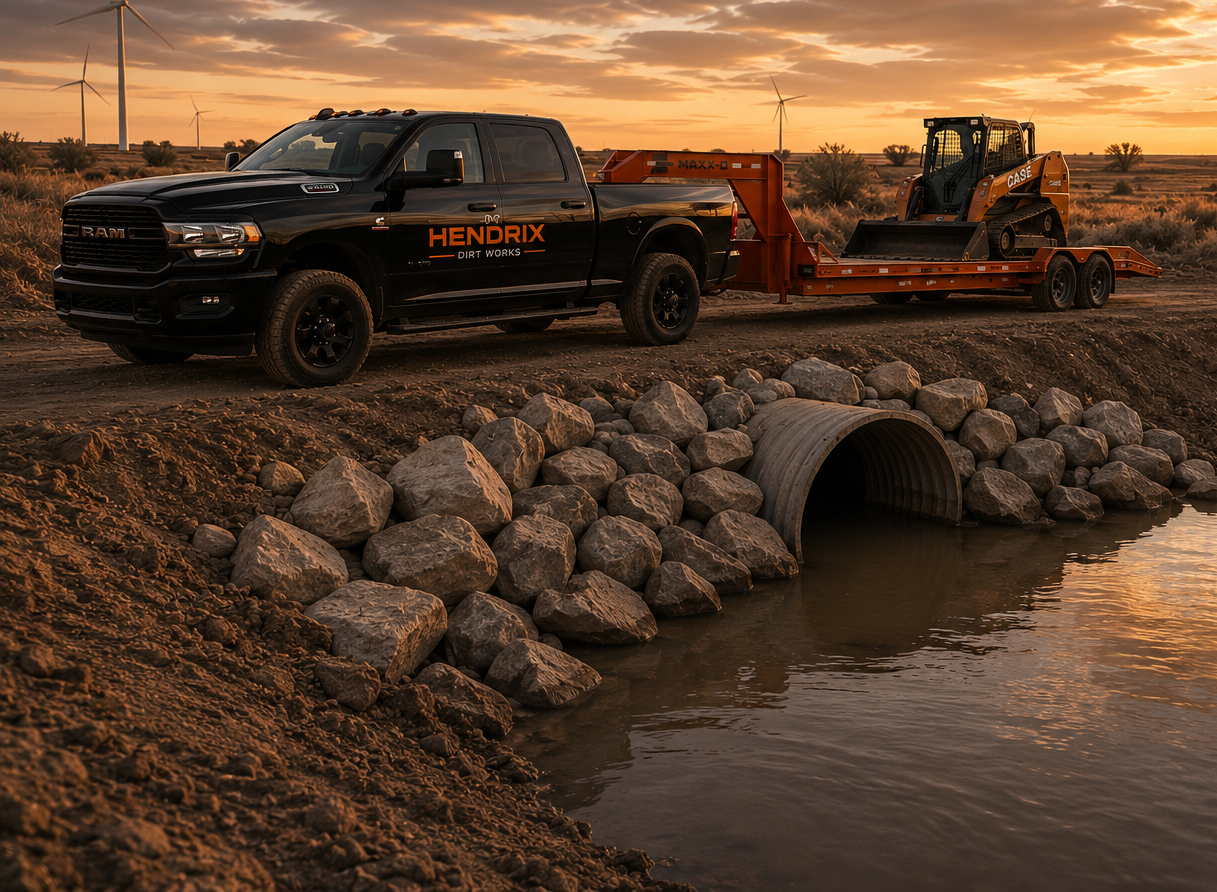
West Texas rainfall patterns create drainage challenges when intense storms deliver large volumes of water in short periods, overwhelming natural drainage paths and causing erosion on properties where runoff concentrates. Pond digging and culvert installation from Hendrix DIRT WORKS address these water management needs by creating retention areas that slow runoff, installing drainage structures that maintain access during wet weather, and shaping terrain to direct water away from structures and roadways. Properties with acreage, rural driveways, or low-lying areas benefit from excavation work that transforms drainage problems into controlled water movement systems.
Culvert installation involves excavating beneath driveways or access roads to the depth required for proper pipe placement, setting culverts at grades that allow water to flow through without backing up during storms, and backfilling with material compacted to support vehicle traffic without causing pipe failure. Pond construction requires excavating to depths that provide adequate storage volume while maintaining stable side slopes, shaping basins to promote even water distribution, and establishing outlet points that release water at controlled rates.
Request a drainage assessment to identify pond and culvert solutions for water management concerns on your property.
What Changes After Pond and Culvert Work Completes
Properly installed culverts maintain driveway and road access during heavy rains by allowing water to pass beneath the surface rather than washing across it, which prevents erosion damage to gravel or pavement and eliminates impassable flooding during storms. Culvert sizing and placement determine whether the structure handles peak flow rates without overtopping or whether undersized pipes create backups that flood upstream areas and accelerate erosion around the culvert ends.
Once pond excavation finishes, you see a basin that collects runoff from contributing drainage areas, holds water long enough to allow sediment to settle, and releases flow through controlled outlets that prevent downstream erosion. The pond also provides benefits for livestock watering, wildlife habitat, and fire suppression water supply depending on size and location. Hendrix DIRT WORKS shapes ponds with side slopes stable enough to resist slumping during wet periods and deep enough to maintain function even when sediment accumulates over time.
Both ponds and culverts require consideration of where water originates, how much volume arrives during peak events, and where discharge should occur to avoid creating problems on adjacent properties. Projects on acreage around Lubbock often involve multiple culverts along access roads and one or more ponds positioned to intercept runoff before it reaches buildings, corrals, or other improved areas.
What Landowners Usually Ask
Pond and culvert projects involve decisions about sizing, placement, and maintenance that affect long-term water management effectiveness.
How is culvert size determined for a specific driveway?
Culvert diameter depends on the contributing drainage area upstream, the intensity of rainfall events typical for Lubbock, and the slope of the channel where the culvert installs, with undersized pipes causing backups and oversized pipes increasing costs without improving function.
What depth works best for ponds on rural property?
Pond depth balances excavation cost against storage capacity and water retention, with depths of eight to twelve feet common for livestock and wildlife ponds, while shallower basins work for sediment control and runoff detention where permanent water is not required.
When should culverts be inspected or maintained?
Culverts require inspection after major storm events to check for sediment accumulation, debris blockage, or erosion around inlet and outlet areas, with maintenance needed when flow capacity reduces or structural damage appears.
What site conditions affect pond construction in Lubbock?
Soil permeability determines whether ponds hold water or require compacted clay liners to reduce seepage, and the depth to groundwater affects whether ponds remain full year-round or function primarily as detention basins that dry between storms.
How do ponds and culverts work together for property drainage?
Culverts convey water beneath access routes to downstream areas where ponds capture and detain runoff, reducing peak flow rates that cause erosion and providing sediment settling areas that improve water quality before discharge continues off the property.
Hendrix DIRT WORKS applies excavation and grading experience to pond and culvert projects throughout Lubbock where water management solutions prevent erosion, improve access, and support long-term property functionality. Contact us to discuss drainage concerns and request project estimates for your acreage.