Services Include:
- Grass and vegetation removal
- Brush clearing
- Small tree removal
- Overgrowth cleanup
- Junk and debris removal
- Dirt pushing and earthmoving
- Property cleanup
- Lot clearing
- Homesite clearing
- Access path clearing
Clearing That Prepares Properties for Use
Land Clearing in Lubbock for overgrown lots, rural acreage, and future construction sites requiring debris removal and vegetation control
Preparing land for development, construction, or improved access begins with removing brush, unwanted vegetation, and accumulated debris that prevents equipment operation and site layout. Properties throughout Lubbock often sit unused for years, allowing mesquite, tumbleweeds, and dense brush to establish root systems that interfere with grading, drainage work, and building placement. Hendrix DIRT WORKS clears overgrown properties while protecting areas you want to preserve, using equipment selected to remove vegetation efficiently without unnecessarily disturbing topsoil in sections that won't require grading.
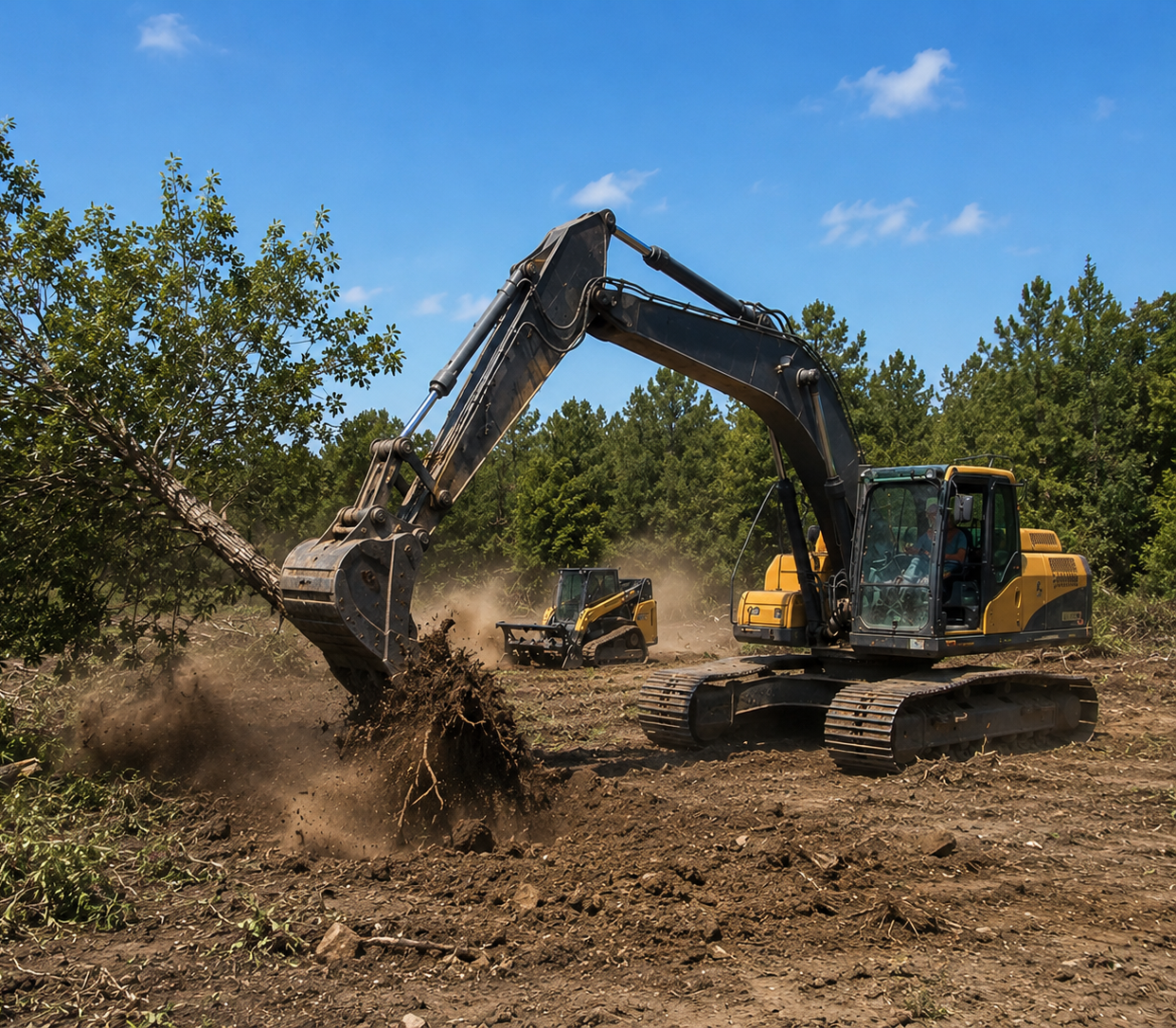
Land clearing involves cutting and removing woody vegetation, uprooting stubborn brush species, clearing accumulated deadfall and debris, and grubbing root systems that would otherwise interfere with construction or cause regrowth problems. The work creates clean, accessible land ready for the next project phase, whether that involves installing driveways, positioning fencing, grading building pads, or simply restoring usable acreage for agricultural purposes. West Texas properties often accumulate windblown debris and invasive vegetation that require mechanical removal rather than hand clearing, particularly when acreage size makes manual methods impractical.
Schedule a property assessment to identify clearing requirements and receive project pricing based on vegetation density and acreage.
What Changes After Clearing Completes
Clearing operations prioritize efficient vegetation removal while minimizing soil disturbance in areas where topsoil preservation matters for later landscaping or agricultural use. Equipment operators make decisions about which machinery handles specific vegetation types most effectively, whether root removal is necessary based on future site use, and how to stage debris piles for removal or disposal without blocking access to uncleared sections.
After clearing finishes, property appearance transforms from overgrown and inaccessible to open and ready for improvement work, with clear sight lines across the land and unobstructed access for vehicles and equipment. You'll immediately notice improved accessibility for surveyors, contractors, and equipment operators who need to move across the site, along with the ability to visualize building placement, driveway routes, and drainage patterns that were previously hidden by vegetation. The cleared land also eliminates fire hazards from dead brush accumulation and reduces habitat for pests that thrive in dense overgrowth.
Clearing projects often precede grading, fence installation, or construction phases, which means scheduling coordination ensures the land stays clear long enough to complete subsequent work without regrowth becoming an issue. Some properties require selective clearing that removes problem vegetation while leaving desirable trees or native plants intact, while others benefit from complete clearing that creates blank slates for development or agricultural use.
Common Questions About This Service
Property owners preparing for construction or reclaiming unused acreage typically want to understand what clearing accomplishes and how the process affects their land.
What gets removed during a typical land clearing project?
Clearing removes brush, small trees, dead vegetation, accumulated debris, invasive plant species, and root systems that interfere with construction or cause regrowth, while leaving topsoil largely intact unless grading work will follow immediately.
How does equipment selection affect clearing results?
Brush cutters handle dense vegetation and small woody growth efficiently, bulldozers remove larger trees and push debris into piles for disposal, and excavators extract deep root systems when complete removal prevents regrowth problems on future building sites.
When should clearing happen relative to other site work?
Clearing must complete before surveying, grading, or construction begins, but scheduling it too far in advance allows regrowth to start before subsequent phases proceed, particularly during growing seasons when West Texas vegetation establishes quickly after rain.
What happens to cleared vegetation and debris?
Material gets piled for on-site disposal if burning regulations and property size allow, hauled off-site to approved disposal facilities when removal is required, or chipped and spread as mulch when organic material benefits soil conditions in non-construction areas.
How much does vegetation density affect project cost?
Dense mesquite thickets and mature brush require more equipment time to clear than sparse grass and weed growth, while projects involving root removal or stump grinding add labor beyond simple vegetation cutting and debris removal.
Hendrix DIRT WORKS handles land clearing for residential lots, rural acreage, and properties requiring site readiness before fencing, construction, or access improvements begin. Arrange a site visit to walk the property and discuss clearing needs specific to your project timeline.