Services Include:
- New gravel driveway construction
- Driveway resurfacing
- Gravel driveway repair
- Regrading and reshaping
- Pothole and rut repair
- Washout restoration
- Road base installation
- Gravel spreading and leveling
- Drainage improvements
- Ranch road maintenance
Driveways Built to Handle West Texas Conditions
Gravel Driveways in Lubbock for properties needing reliable access despite rain, wind, and temperature swings
Hendrix DIRT WORKS installs gravel driveways across Lubbock for homes, ranch properties, private roads, and rural access points where paved surfaces prove impractical or cost-prohibitive. The work begins with proper grading to establish drainage flow, followed by compacted base preparation that prevents settling and rutting under vehicle weight. West Texas weather cycles between heavy rain events and extended dry periods, which means driveways need a foundation that sheds water quickly while resisting erosion when storms arrive.
A quality gravel driveway installation involves removing unstable topsoil, shaping the grade to direct water away from structures, and compacting layers of base material before applying the final gravel surface. The drainage management step prevents washouts during thunderstorms and keeps the driveway from becoming a muddy channel when rain does fall. Proper compaction also stops gravel from migrating under traffic, which extends the time between resurfacing needs.
Schedule an estimate to review your property's access requirements and discuss grading options for new driveways or resurfacing work.
What Proper Gravel Installation Requires
The base preparation determines how well your driveway performs over years of use. The process involves excavating soft or unstable soil, establishing a crowned or sloped grade that directs water to the edges, and compacting aggregate base material in lifts to create a stable platform. Without compaction, the gravel settles unevenly under vehicle traffic, creating ruts and low spots that collect water and accelerate surface damage.
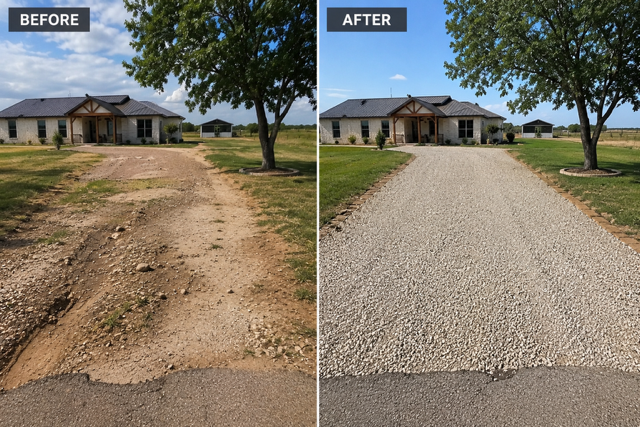
After completion, you'll notice improved accessibility regardless of weather, reduced mud tracked onto paved areas or into buildings, and a cleaner property appearance that eliminates the rough, uneven look of deteriorated access routes. The driveway sheds rainwater rather than pooling it, which means the surface dries faster and stays firmer during wet periods. Vehicles no longer spin tires in muddy sections or kick up dust clouds during dry months, and the compacted base resists the washboard effect that develops on loose gravel roads.
Driveway installations can include expansions for additional parking or turnaround space, repairs to sections damaged by erosion or poor drainage, and resurfacing to restore gravel depth after years of compaction and migration. Material selection affects both appearance and performance, with angular crushed stone locking together more effectively than rounded river rock, though project requirements vary based on traffic volume and property layout.
What Property Owners Usually Ask
Gravel driveways remain a practical solution for rural access throughout the Lubbock area, where distance from municipal services and soil conditions make them the preferred choice over asphalt or concrete in many situations.
How does base preparation prevent washouts during heavy rain?
Proper grading creates a crowned surface that sheds water to the edges before it can cut channels through the gravel, while compacted base layers resist erosion by staying in place during runoff events that would move loose material.
What benefits justify choosing gravel over leaving the access route unpaved?
Gravel eliminates the mud, dust, and rutting problems that make unpaved routes difficult to navigate, provides year-round accessibility for vehicles and equipment, and lowers long-term maintenance costs compared to repeatedly blading or filling problem areas with loose dirt.
When should existing gravel driveways be resurfaced?
Resurfacing becomes necessary when the gravel layer thins enough that vehicle tires contact the base layer during normal use, when ruts deepen beyond minor grading fixes, or when erosion has removed material from drainage channels that need reshaping.
How does West Texas weather affect gravel driveway longevity?
The region's intense sun and temperature swings cause minimal damage to gravel compared to asphalt cracking, but sudden thunderstorms can wash out poorly graded sections if water concentrates instead of dispersing across the surface.
What factors determine how much gravel material a driveway installation requires?
Driveway length and width establish the area to cover, while the desired gravel depth and base layer thickness depend on expected traffic volume, soil stability, and whether the route serves occasional access or daily heavy vehicle use.
Hendrix DIRT WORKS handles new driveway installations, gravel resurfacing, drainage corrections, and expansions for properties throughout Lubbock and the surrounding area. Request a project evaluation to discuss your access needs and receive detailed pricing for materials and grading work.