Land Shaping That Supports Your Projects
Dirt Work in Lubbock for residential, agricultural, and property improvement projects requiring precision grading and site shaping
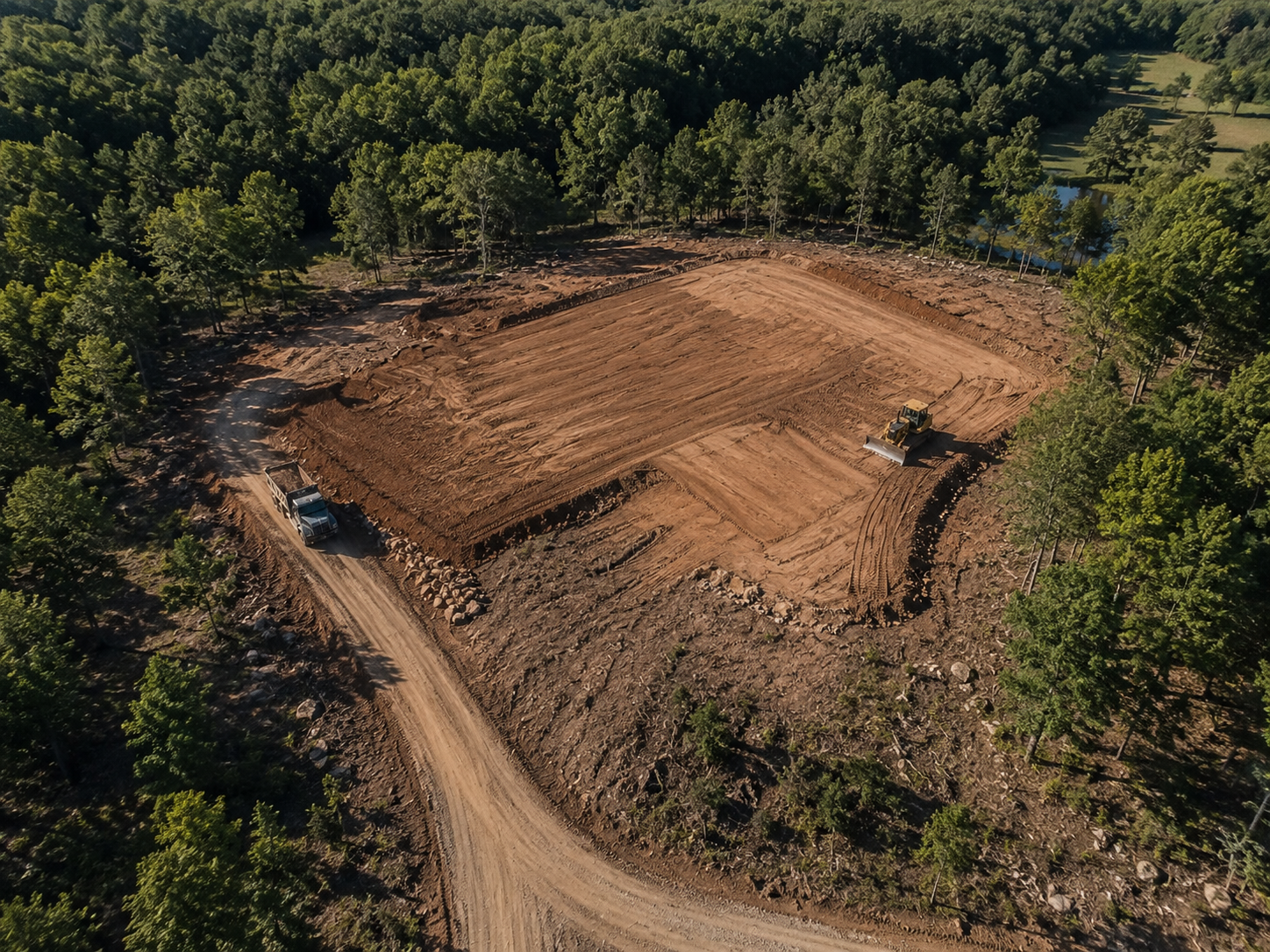
Undeveloped acreage across Lubbock often requires significant earthmoving before construction, access routes, or drainage improvements can proceed. Hendrix DIRT WORKS moves, shapes, and levels land for homesites, rural property development, and agricultural projects where accurate grading determines whether water flows away from structures or pools in problem areas. The work involves cutting high spots, filling low areas, and establishing grades that match project specifications while maintaining natural drainage patterns that prevent erosion on surrounding land.
Dirt work services include excavating building pads, shaping access roads, creating drainage channels, leveling equipment yards, and recontouring land to improve usability. Efficient equipment operation reduces project timelines while attention to elevation accuracy ensures that finished grades match engineering plans or functional requirements. The difference between rough shaping and precision dirt work shows up when structures stay dry during storms, driveways remain passable after heavy rain, and property owners avoid costly regrading to fix drainage problems that developed from inaccurate initial work.
Request a project evaluation to discuss grading requirements and receive an estimate based on site conditions and project scope.
Why Accurate Grading Matters Long-Term
Moving dirt efficiently requires understanding how soil compacts, how drainage flows across shaped terrain, and where to position cut and fill areas to minimize material hauling while achieving target elevations. Equipment operators make constant adjustments based on soil moisture, compaction resistance, and grade tolerances, which separate projects that meet specifications from those that require correction work after settling or erosion reveals problems.
Once dirt work completes, property usability improves immediately through better drainage flow that directs runoff away from buildings and access routes, level surfaces that accommodate construction or equipment operation, and stable grades that resist washouts during storms. You'll observe that water no longer pools in low spots, access routes remain firm during wet weather, and the land matches the functional layout required for your intended use. Properly shaped sites also simplify future projects by providing stable foundations and clear drainage patterns that contractors can build on without extensive site corrections.
Dirt work projects frequently involve clearing vegetation before grading begins, removing and stockpiling topsoil for later redistribution, and coordinating material import or export when cut and fill volumes don't balance on site. Rural properties may require shaping fields for irrigation or livestock management, while residential projects often focus on creating level building pads and driveway grades that meet local standards.
Answers to Frequent Service Questions
Dirt work requirements vary significantly based on existing terrain, soil conditions, and project objectives, which makes site evaluation essential before accurate estimates become possible.
What happens during the initial site evaluation?
The evaluation involves walking the property to identify existing grades, drainage patterns, soil conditions, and obstacles that affect equipment access, followed by discussing your project goals to determine what earthwork will achieve the required results.
How does proper grading prevent future drainage problems?
Accurate grading establishes positive drainage away from structures and toward designated discharge points, which prevents water from ponding against foundations, undermining access routes, or creating erosion channels that worsen over time.
What equipment gets used for typical dirt work projects in Lubbock?
Projects typically involve bulldozers for rough shaping and clearing, motor graders for precision finish work on access routes and pads, and excavators for digging drainage features or moving material in confined areas.
When should dirt work be scheduled relative to other construction phases?
Dirt work must complete before foundation work, utility installation, or access route construction begins, since those phases require stable, properly graded surfaces that won't shift or settle after subsequent work proceeds.
What factors affect how long dirt work takes to complete?
Project duration depends on the area being shaped, the amount of cut and fill required to reach target grades, soil conditions that affect equipment productivity, and weather delays during wet periods when working disturbed soil creates compaction problems.
Hendrix DIRT WORKS completes dirt work projects with attention to grade accuracy and drainage functionality, backed by a commitment to customer satisfaction throughout the process. Contact the office to schedule a consultation for your upcoming project and discuss timeline requirements.